
Overview
You get a fair cash offer, professional rigging and freight included, and a clear plan to remove the unit safely. Whether it is oil-filled or dry-type, pad-mount, pole-mount, substation class, or an indoor cast resin, our team knows how to assess value and get it off-site without disrupting operations. Send photos and basic details, and we will do the rest. From copper windings and core salvage to oil handling and disposal routing, we understand the equipment and the logistics behind it, so you do not have to. Call 954-740-1983 or email electricalequipmentbuyers@gmail.com to start.
Why sell to us
What Counts as Scrap vs. Failed Transformers
A failed transformer is a unit that has experienced a fault such as a winding short, bushing flashover, ruptured tap changer, or thermal damage but still retains recoverable components or may be repairable. These often include pad-mount distribution transformers with internal faults, substation units with leaking radiators or gaskets, or dry-type machines with burned coils from overloads or moisture ingress. We evaluate these for parts, copper, steel, and the practicality of removal and transport.
Scrap transformers are generally beyond economic repair. Fire-damaged cores, severe tank deformation, extensive carbon tracking, or catastrophic LTC failures are typical. Even then, they contain valuable metals and reusable hardware, and the tank and core steel are recoverable. We buy both categories, including single-phase and three-phase, oil-filled and dry-type, and we tailor our offer to the real salvage value and the handling required at your site.
What we buy
Where These Units Live and Why They Fail
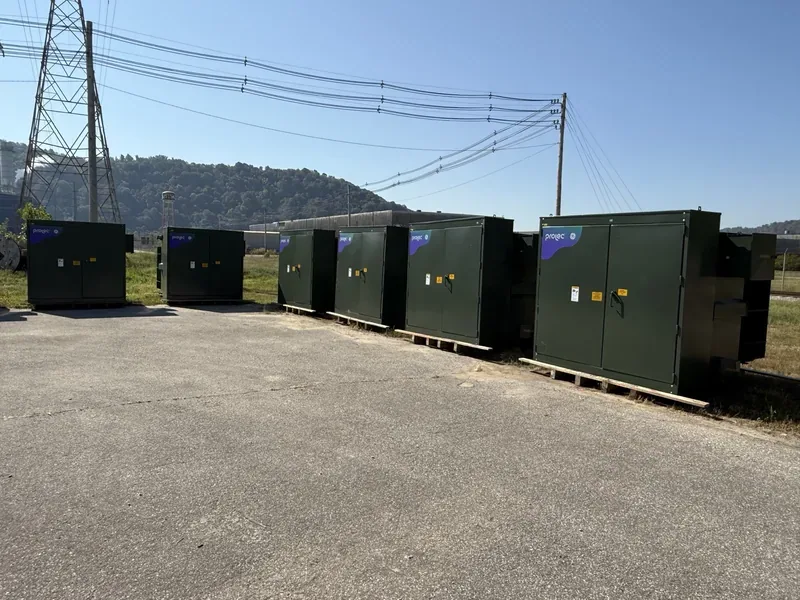
Transformers are embedded across every industry. You will find pad-mounts feeding commercial campuses and data centers, dry-types in hospitals and high-rise electrical rooms, pole-mounts on utility distribution lines, and medium-power substation units stepping down for industrial plants, refineries, and mines. Renewable sites deploy pad-mounts on solar arrays and step-up transformers at wind and battery storage interconnects. Universities and municipalities use network and substation-class assets throughout their systems.
Failure modes track the operating environment. Outdoor oil-filled units face lightning and switching surges that stress bushings and windings. Load tap changers can wear contacts, and gaskets age, leading to moisture ingress. Dry-types are sensitive to dust, heat, and humidity, especially in mechanical rooms with inadequate ventilation. Overloads, insulation aging, and contaminated oil are common threads. Whether the unit tripped on differential, showed combustible gas in DGA, or simply leaked down and tripped offline, we will still buy it and remove it safely.
How it works
Typical kVA Ranges and Voltage Classes We See
On the distribution side, pad-mount and pole-mount transformers often fall between 10 kVA and 2,500 kVA, with primary voltages in the 4.16 kV to 35 kV class and secondaries at 480Y/277, 208Y/120, or 240/120. Dry-type indoor units commonly range from 150 kVA to 3,000 kVA serving 480Y/277 to 208Y/120 or medium-voltage primaries at 4.16 to 15 kV. Many industrial sites use 1,000 to 5,000 kVA pad-mounts to supply process loads.
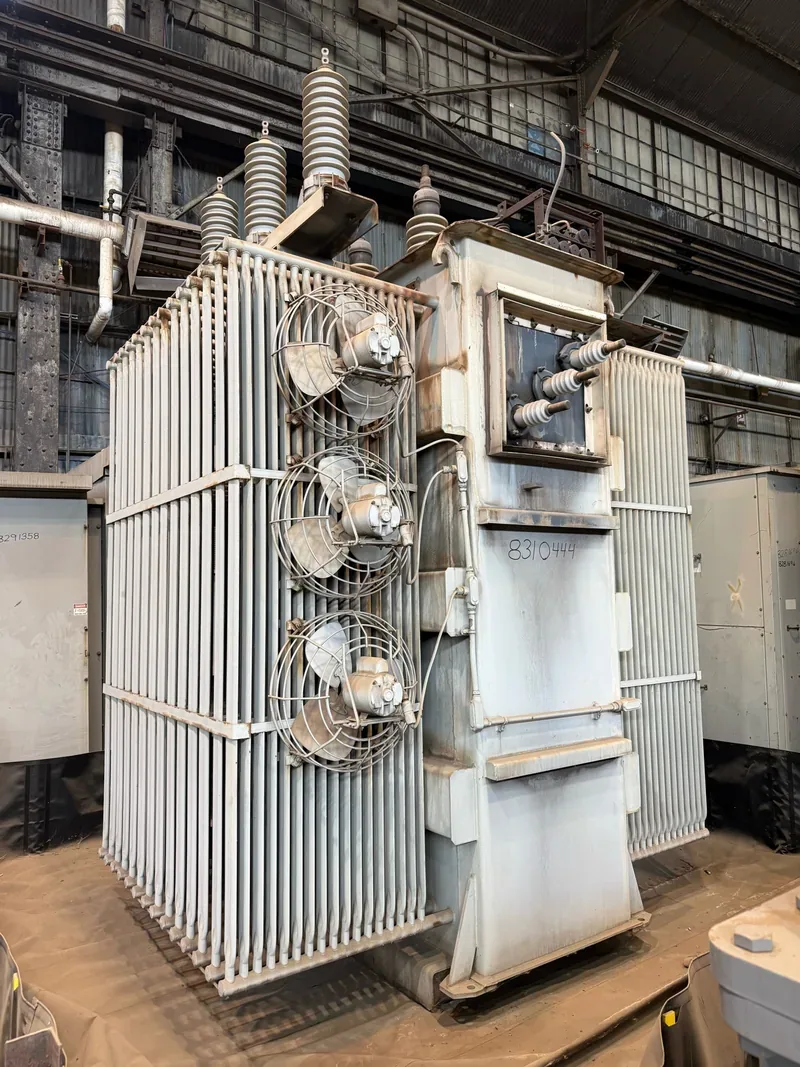
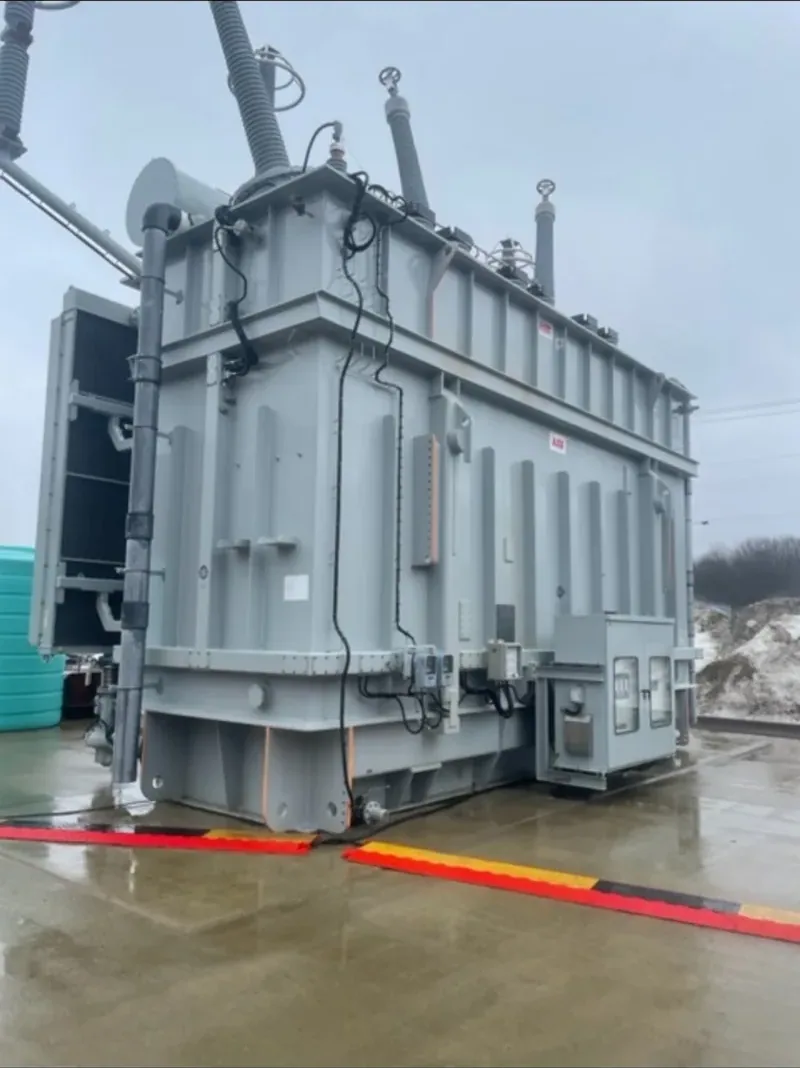
Power-class substation transformers scale up quickly. It is common to encounter 5 MVA to 50 MVA and higher, with high-voltage windings at 46 kV, 69 kV, 115 kV, or 138 kV classes and low-voltage windings feeding 4.16 kV, 12.47 kV, or 13.2 kV distribution. Insulation levels are reflected in BIL ratings appropriate to the voltage class. Cooling designations such as OA/FA or ONAN/ONAF matter for weight and removal planning, which we factor into transport and crane sizing.
Logistics and payment
What Drives Value: From Windings to Bushings
Working units are generally worth more than failed units, and failed units usually exceed scrap-only value when key components are intact. Copper windings command higher salvage value than aluminum, and the mass of copper in the windings relative to the steel core is a major driver. Some nameplates state conductor material; if not, weight and manufacturer conventions help us assess it. Undamaged cores, intact clamping structures, and complete radiators and coolers improve outcomes.
Age and condition count. A younger unit with a localized failure can be parted efficiently, while an older unit with extensive thermal damage may be worth only its metal. Clean, dry, non-contaminated oil adds to net value, whereas oil with known contaminants, sludge, or water reduces it due to handling and disposal costs. Bushing condition is critical. Unbroken porcelain, complete terminals and tap changers, and undamaged arresters raise the recovery value. The location, access route, and rigging complexity also influence offers because they affect removal cost.
Detail
Nameplate Photos That Help Us Price Accurately
Clear nameplate photos are the fastest path to a precise cash offer. Start with a straight-on, readable shot of the full plate, then take close-ups if any fields are hard to read. We look for kVA or MVA rating, primary and secondary voltages, phase and connection (delta or wye), frequency, percent impedance, and cooling class such as OA/FA, ONAN/ONAF, or ODAF. Manufacturing date, serial number, and BIL ratings inform insulation class and expected mass.
Other helpful items include temperature rise, oil volume in gallons, total weight if listed, tap changer type and range such as ±2 x 2.5% or ±10%, and any statement regarding oil type or PCB status. Some plates indicate conductor material, insulation class for dry-types, or NEMA enclosure details. If there are separate plates on tap changers, bushings, or radiators, photograph those as well. A photo of the exterior data decal on pad-mount doors also helps confirm configuration and phases.
Also worth knowing
Safe Removal, Rigging, and Decommissioning
Transformer removal starts with proper de-energization and lockout-tagout by your team or utility. Once verified, we plan a route that protects concrete, underground utilities, and thresholds. For oil-filled units, we may pump down oil to reduce lifting weight and secure all valves and fittings. Tanks are blanked as needed, and bushings are protected or removed to clear doorways and height limits. Dry-types are skated on machinery skates or lifted with a gantry or forklift, depending on floor ratings and access.
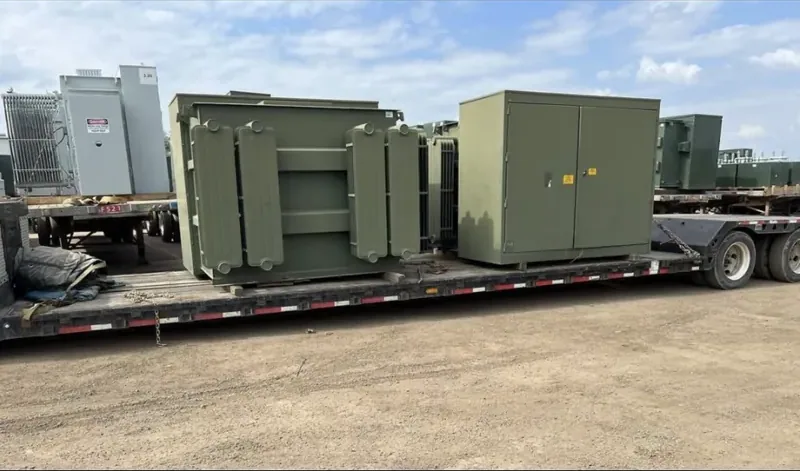
Rigging plans account for lift points, spreader bars for tall tanks, and ground-bearing pressure for cranes. Pad-mounts are rolled out and lifted to a lowboy or step-deck with appropriate dunnage. Substation units may require a crane, jack-and-slide, or a gantry if overhead obstructions exist. Every load is blocked, banded, and tarped as needed. Our team coordinates site access, escorts if required, and timing to minimize disruption, then manages the freight to the recycler or processing facility.
Condition and testing
Oil Handling and Environmental Considerations
Oil management is planned to match the unit’s condition and status. Non-PCB mineral oil is typically transferred to totes or a vacuum truck with secondary containment, then routed for recycling or disposal. If there is a known or suspected PCB designation based on age or plate markings, we will discuss sampling or accept recent lab results. Units labeled Non-PCB streamline logistics, while unknown oil may require testing before transport. Our approach is to keep the site clean and compliant through careful containment and labeling.
Leakers are stabilized before movement. Drip pans, absorbents, and gasket plugging prevent spills during handling. If the unit suffered a rupture, we stage a controlled pump-out and tank cleanup before lift. Dry-types avoid oil concerns but may contain soot or charred insulation; we bag and secure debris-prone parts for transport. Your environmental team sets site rules, and we align our plan and documentation so your records reflect a proper chain of custody.
Freight
How the Offer, Pickup, and Payment Work
Send photos of the unit, the nameplate, and the access path, plus your pickup location and any site rules. We respond with a cash offer that reflects metal content, condition, and removal complexity. Once accepted, we schedule rigging and trucking, provide an estimated timeline, and coordinate with your site contact. If utility disconnects or special permits are required, we align the calendar so everything lands in the same window.
On pickup day, our crew arrives with the right equipment, completes the load-out, and secures the transformer for transport. We issue the bill of lading and agreed paperwork, then process payment according to our agreement. Most projects complete in a single mobilization, but multi-day heavy lifts are common for larger substation units. Either way, our goal is a clean pad or room, a safe job, and funds in your hands without extra work on your side.
Other transformers we buy
Common questions
Questions sellers ask
How do you price a failed transformer with a blown high-voltage bushing?
We look at the overall recoverable value rather than a single damaged component. Clear photos help us assess whether the core and coil stack is intact, if the tank and radiators are reusable or purely scrap, and whether the windings are copper or aluminum. We also factor oil condition and contamination risks if it is oil-filled. The access path, need for a crane, and distance to the nearest suitable recycler affect transport and rigging costs. Put simply, bushing damage lowers value, but the rest of the unit may still carry meaningful weight.
Do you buy transformers with suspected PCB oil or unknown oil status?
Yes, we consider units with unknown or suspected PCB status, but the handling plan differs. If the nameplate or decal states Non-PCB, that simplifies everything. If not, an oil sample or a recent lab report clarifies routing and cost. We can coordinate testing when needed and arrange compliant transport and disposal through qualified partners. Pricing will reflect the additional steps, but we remain interested in the metals and components. Send the nameplate photos and any previous test results so we can move quickly.
Can you remove a transformer from an energized substation yard without shutdown?
We will not work on or near energized conductors. Your utility or site operator must isolate, ground, and release the equipment for removal. Once it is safe and released, we can mobilize with the correct PPE, rigging plan, and crane or jack-and-slide system to clear the yard layout. We coordinate with your protection and control team for any relay or SCADA disconnect steps, confirm approach distances are maintained, and schedule during approved outage windows. Safety and compliance drive the plan from the first site walk.
What photos do you need besides the nameplate to make an offer?
Please send wide shots of the transformer from each side, close-ups of bushings and terminations, and any damaged areas. For oil-filled units, a photo of the radiator bank, conservator, and LTC cabinet helps. For dry-types, include the coil faces and enclosure interior if accessible. We also need images of the access route such as doorways, hallways, gate clearances, overhead obstructions, and the loading area. A quick note on floor rating or slab thickness is valuable for heavy units. With that, we can price and plan accurately.
Do you buy burned or soot-covered dry-type transformers from electrical rooms?
Yes. Burned dry-types still contain significant copper or aluminum in the windings and recoverable core steel. We will ask about building access, elevator or stair constraints, and whether there are hot work or air quality requirements. Our crew can bag loose debris, protect floors and walls, and use skates or a gantry to navigate tight spaces. The nameplate, even if partially legible, helps confirm kVA, voltage, and insulation class. Provide photos and the building’s rules, and we will return a cash offer with a safe removal plan.
How fast can you pick up and when do I get paid?
Timing depends on size, location, and site constraints, but many small and mid-size units can be picked up within days once we have photos and an accepted offer. Larger substation transformers may require permits, cranes, or utility coordination, which adds lead time. We align payment with the pickup, typically via wire or check per our agreement. Our focus is a predictable schedule, clear communication, and getting funds to you promptly after a safe, clean removal.
Ready to move the unit?
If you are staring at a failed or end-of-life transformer, we will turn it into cash and clear the pad or electrical room without drama. Send photos of the unit, the nameplate, and the access path, and we will respond quickly with pricing and a plan. From copper vs. aluminum windings to oil handling and rigging, we handle the details so you can move on. Call Moses Johnson at 954-740-1983 or email electricalequipmentbuyers@gmail.com.