
Overview
That ratio determines whether the device increases voltage from primary to secondary (step-up) or decreases it (step-down). For anyone looking to sell or recycle transformers, knowing this distinction is more than academic. The designation affects how a unit was used, its physical construction, what testing will be required to confirm functionality, and ultimately how buyers value the copper, core steel and insulating materials. This entry explains what the terms mean in practical and technical terms, how to identify step-up and step-down units on site using nameplates and physical clues, and why the difference matters when a company like transformersbuyers.com comes to evaluate equipment. We focus on details that a plant manager, site superintendent or facilities manager can check without specialized instruments, while also describing the tests and inspections a buyer will run to determine condition and offer a cash price.
Why sell to us
A precise technical definition
A step-down transformer reduces voltage from its primary winding to its secondary winding; a step-up transformer increases voltage. The relationship is governed by the turns ratio: Nprimary:Nsecondary. If the secondary has fewer turns than the primary, the secondary voltage is lower and the device functions as a step-down. If the secondary has more turns, the secondary voltage is higher and the device functions as a step-up. Magnitude, not direction of line connection, determines the designation on the nameplate and the intended application.
On three-phase equipment the same principle applies but is expressed per phase, and connection type—delta or wye—affects line versus phase voltage relations. The nameplate will show rated primary and secondary voltages, frequency, impedance, and usually the vector group or phasing. Those discrete entries, taken together, define whether a transformer was specified to step up or step down in service.
It is important to remember that a physical transformer is reversible in the sense that you can feed either winding, but that does not change the rated behavior or the safety and code requirements. Reversing operation can be useful for temporary work but affects insulation stresses, grounding and protective coordination, and is not a substitute for using the right rated unit in service.
What we buy
Why step-up versus step-down affects resale and scrap value
Value is tied to what a unit contains and how it was built. Distribution step-down transformers commonly have larger low-voltage copper windings, bushings sized for secondary loads, and tank or enclosure features suited to lower voltages. Step-up units, such as those used in power plants or generator tie-ins, often have larger high-voltage windings and insulation systems intended for higher dielectric stress. A buyer assessing purchase or salvage value will consider the relative mass of copper or aluminium, the core steel weight and condition, insulation health, and whether oil is present and recoverable.
Operational status further changes valuation. A working unit that meets electrical tests for turns ratio, insulation resistance, and dielectric integrity is assessed as equipment. A failed or heavily deteriorated unit is mainly valued for its metal and recoverable oil, but the construction type—step-up or step-down—still affects the proportions of copper, aluminium and core steel and therefore the scrap return. Tap changers, oil conservators, and HV bushings can add value because they are reusable or recyclable components.
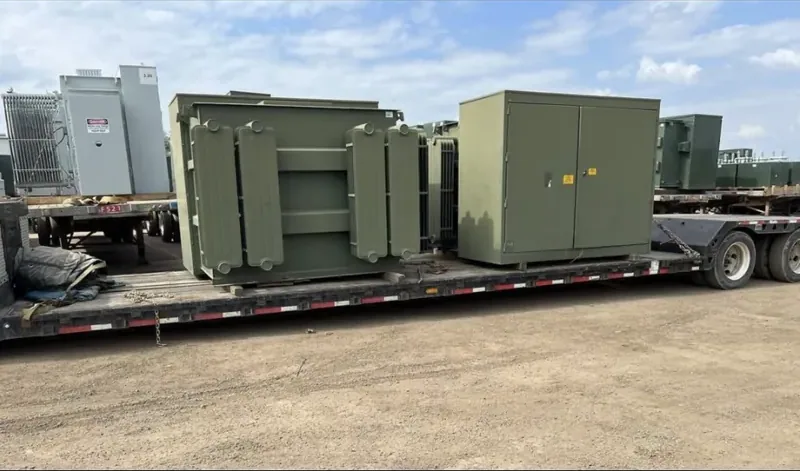
Logistics and specialty handling also influence net value. Large step-up transformers are commonly heavier and require more rigging and truck capacity. Buyers that handle freight and rigging will factor that into the offer but sellers should expect that large high-voltage units may require line clearances, specialized lifting points and certified rigging crews.
How it works
How to identify step-up or step-down on your equipment
Start with the nameplate. Most transformers list rated primary and secondary voltages and their rated vector group or phasing. If the higher voltage number is on the primary rating, the unit is a step-up in its intended orientation. If the higher voltage is on the secondary rating, it is a step-up when connected in that direction. Many distribution units are labeled with a primary like 13,200 V and a secondary like 480 V, which clearly shows a step-down function in typical service.
Physically inspect bushing sizes and locations. High-voltage bushings are often smaller in conductor cross-section but are insulated for higher voltage potential and are arranged according to the HV winding. Low-voltage bushings are bulkier for higher current. Look for tap changer housings and conservator tanks that often accompany oil-filled high-voltage units. For dry-type units, examine terminal boxes and winding insulation classes which will be marked on internal plates.
If the nameplate is missing, trace conductor sizing and winding leads if accessible. Larger conductor cross-sectional area indicates higher current low-voltage windings. Conversely, more insulation insulation layers and greater creepage distances typically indicate the higher-voltage side. When in doubt, take clear photographs and forward them with the nameplate data when requesting a cash offer; a buyer can advise whether the unit is step-up, step-down or configured as an auto-transformer.
Logistics and payment
Winding arrangements, connections and tap changers
The internal arrangement—single-phase or three-phase, two-winding or autotransformer, delta or wye connections—matters for both function and value. Autotransformers share a winding for both sides and can be lighter for a given kVA, but they do not provide the same isolation as two-winding transformers. Buyers treating units for reuse will check whether isolation is required for the buyer's intended application, and recyclers will note differing material composition.
Tap changers allow nominal voltage adjustments under load or offline and are more common on transmission and substation units. An on-load tap changer adds mechanical complexity and value when serviceable; a de-energized tap changer is simpler but still a salvageable component. The presence of a tap changer often indicates the unit was part of a system requiring fine voltage regulation, which can increase interest from buyers that refurbish equipment for grid applications.
Vector group and phasing notations show how windings are connected and the phase shift between primary and secondary. This affects whether a transformer can be paralleled with other units and how it integrates into a system. For a seller, supplying vector group information speeds evaluation and helps ensure an accurate cash offer.
Detail
Common misconceptions about step-up and step-down
A frequent misunderstanding is that a transformer is permanently one or the other. In practice a transformer’s designation depends on which winding is treated as primary in the application, while the nameplate shows the intended rated configuration. Reversing connections can make a step-down operate as a step-up, but this may violate insulation ratings and safety requirements. Sellers should not assume reversibility removes constraints on reuse or resale.
Another misconception is that higher-voltage always means higher scrap value. High-voltage transformers can be heavy and contain large amounts of steel and copper, but they also present higher transportation and disposal costs, and may contain regulated insulating oil. The net value balances material content, condition, and removal complexity. Buyers that handle freight and rigging can often realize more value from a site than a seller attempting to ship a large unit themselves.
Finally, people sometimes confuse transformer function with brand or model prestige. While certain designs are sought after by refurbishers, the decisive factors are nameplate ratings, material condition, and whether the unit passes electrical testing. Clear documentation and photographs accelerate accurate appraisal.
Also worth knowing
Practical examples across common equipment types
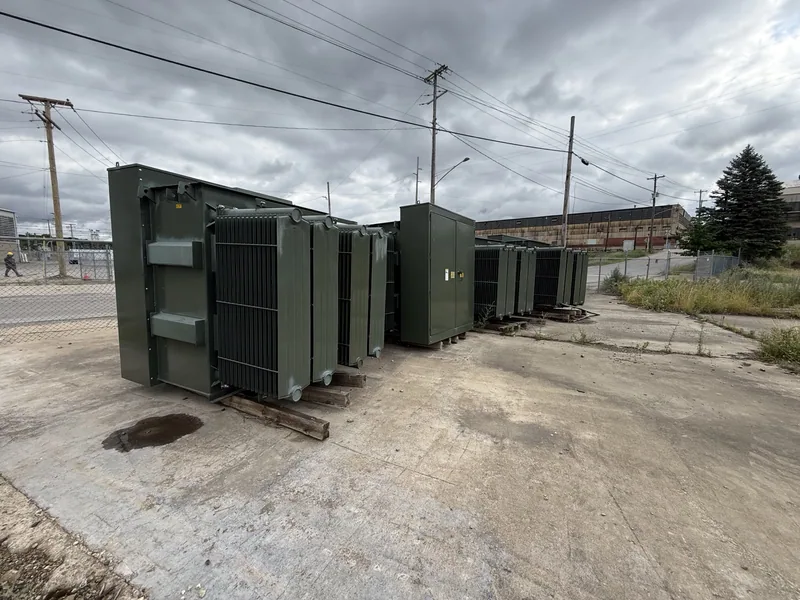
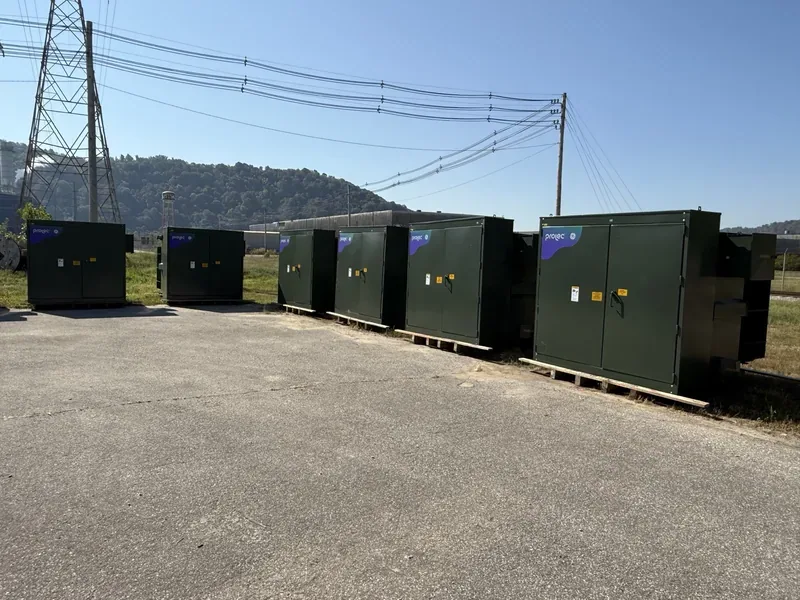
Padmount and polemount distribution transformers are typically step-down devices, bringing distribution voltages down to building or service level. Their low-voltage windings carry higher currents, and their bushings and enclosures are designed for distribution duty. These units are frequently encountered in commercial and industrial surplus and their form factors make them straightforward for a buyer to evaluate and remove with common utility rigging.
Substation and transmission transformers often perform step-up or step-down duties at higher voltage classes and may include complex tap changers and conservator systems. These units are heavier and require specialized handling. Even when retired or failed, their cores and windings can be valuable for recycling, while intact tap changers and bushings are reusable components that add to the overall offer.
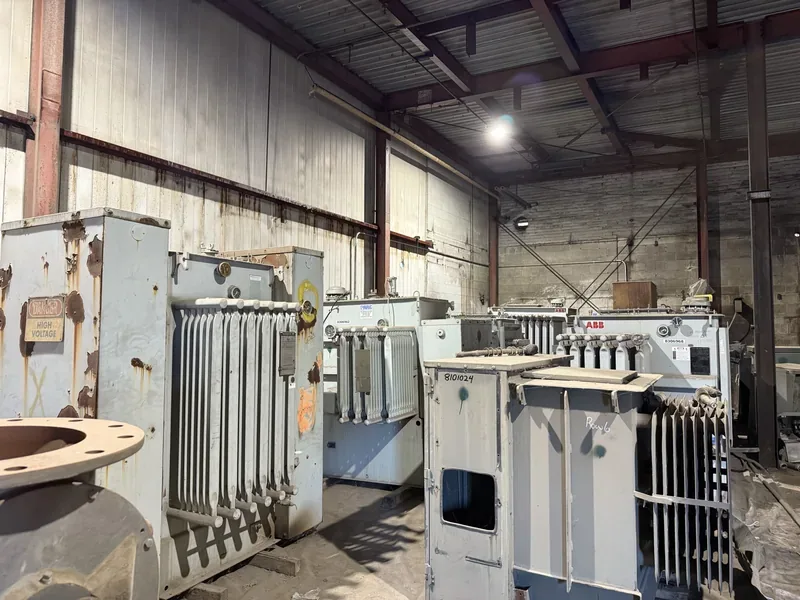
Dry-type and unit substation transformers have differing salvage profiles. Dry-type units are simpler to remove and ship but contain less recoverable oil, while unit substations combine switchgear with transformer's metallurgy. For sellers, describing the type, noting oil leaks, listing nameplate ratings and providing photos significantly improves the speed and accuracy of an offer.
Condition and testing
What sellers should do before requesting an offer
Document the nameplate first. A clear photograph of voltage ratings, kVA, vector group and serial number is the fastest way to receive an informed cash offer. Note visible damage, oil leaks, signs of overheating, or missing components. Buyers will eventually test units for turns ratio, insulation resistance and dielectric integrity, but early transparency speeds appraisal and avoids delays in scheduling pickup.
Prepare site access information and any known rigging constraints. Describe available clearances, whether a crane or lift is required, and whether the unit is indoors or in a fenced substation. A buyer that handles freight and rigging needs to plan for traffic control, cranes, or heavy-haul trucks and will price those logistics into the offer. Providing drawings or photographs of approach routes and mounting details reduces on-site surprises.
When you reach out to a purchaser, call or email with the details. Transformersbuyers.com buys working, failed and scrap transformers, pays cash, and coordinates pickup and rigging nationwide. Give as much information as you can and expect the buyer to request additional photos or to schedule an on-site inspection before finalizing an offer.
Common questions
Questions sellers ask
How can I tell if my transformer is a step-up or step-down unit?
Check the nameplate first. It lists the rated primary and secondary voltages. If the higher voltage is listed as the primary, the device is a step-up in its intended orientation; if the higher voltage is the secondary, it is a step-down for that orientation. If the nameplate is missing, examine bushing sizes, conductor cross-section and insulation; higher-voltage sides have larger insulation clearances and different bushing arrangements. Photographs and measured voltage ratios allow a buyer to confirm classification.
Do you buy transformers that no longer work or that leak oil?
Yes. Buyers value the metals, core steel and recoverable oil in failed or leaking units, and many purchasers will pay a cash price for scrap condition. That said, oil leaks and environmental contamination add disposal and remediation considerations that affect the offer. When contacting a buyer, document leaks, corrosion and any known faults. Clear disclosures help the buyer plan removal and permit compliance and lead to a faster, fair cash offer.
What information speeds up a cash offer for a transformer?
Provide nameplate photos showing voltages, kVA rating, vector group and serial number, and describe the unit type (padmount, polemount, substation, dry-type). Note condition issues such as oil leaks, burn marks, or missing components, and include photos of the surrounding site and access routes. Also tell the buyer whether the unit is energized or isolated and whether permits or special clearances will be required for removal. Detailed information reduces back-and-forth and speeds scheduling.
Will you handle pickup, freight and rigging?
Yes. A professional buyer coordinates pickup, heavy rigging and freight logistics. Large transformers often require cranes, certified rigging crews and special transport permits. Telling the buyer about access, weight estimates and approach routes up front helps them prepare the correct equipment and quote a firm cash offer that accounts for removal complexity. Sellers should confirm site safety requirements and any lockout/tagout conditions before scheduling removal.
Does an on-load tap changer change the value of a transformer?
An on-load tap changer adds mechanical and electrical complexity and is a serviceable component that can increase overall value if it is operable. Buyers that refurbish equipment value well-maintained tap changers highly because they are expensive to replace. Even when the main transformer is scrap, functional tap changers or their parts can be resold or refurbished, improving the net offer compared with a unit that lacks these components.
Are auto-transformers worth less than isolated two-winding transformers?
Auto-transformers can be lighter and use less copper for the same kVA, which affects their material composition and thus scrap valuation. From a reuse perspective, autotransformers do not provide the same electrical isolation as two-winding units, so buyers seeking isolation may prefer two-winding transformers. The ultimate value depends on condition, intended reuse, and recoverable materials; accurate nameplate data and photos let a buyer determine which category a unit falls into and what cash offer is appropriate.
Ready to move the unit?
If you have step-up, step-down, padmount, polemount, substation or dry-type transformers to move, provide nameplate photos and site access details and we’ll respond with a cash offer and removal plan. Transformersbuyers.com purchases working, failed and scrap units, handles freight and rigging, and pays cash on pickup. Call or email to start the process: 954-740-1983 and electricalequipmentbuyers@gmail.com