Overview
Contact begins with a short message and a few key details about the equipment. From there we evaluate condition, schedule an inspection if necessary, and confirm logistics tailored to your site constraints. Our goal is to move equipment safely and quickly while minimizing disruption to your operations. Use the phone number or email below to start, or send initial information through your preferred method and expect a prompt response describing next steps.
Why sell to us
How to Reach Us
Calling is the fastest way to start if the transformer is urgent or occupying a critical area. When you call 954-740-1983 you will speak with someone who understands transformer types, common failure modes, and the logistics involved in removal. If you prefer email, send descriptive information and photos to electricalequipmentbuyers@gmail.com and include the site address and any access constraints. Either route allows us to triage your request and assign the appropriate resource for follow-up.
If you leave a voicemail or send an email outside business hours, include the best callback number, the unit location, and the approximate tonnage or dimensions if available. That information helps us determine whether a site visit is needed and whether standard pickup gear suffices. We try to respond quickly with specific questions or a preliminary cash offer range so you know what to expect.
When an immediate decision is required on site, use the phone. For planned removals or larger projects involving multiple units, email with attachments is ideal because it allows us to log the details and begin coordination with rigging and freight partners. Either way, communication aims to be clear, technical, and action-oriented so we can move from inquiry to removal with minimal delays.
What we buy
What to Send First
The most useful starting information is the transformer nameplate data. A legible photo or a typed list of the kVA rating, primary and secondary voltage, phase, vector group, serial number, and manufacturer lets us assess technical value and safety considerations. If the unit has been damaged or repaired, note that and include any maintenance records you have; those details can affect handling and pricing.
Photos from multiple angles are essential. Exterior shots show mounting and lifting points, pad condition, manifolds, conservator tanks, and whether the unit is energized or isolated. Interior shots for dry-type units should show coil assemblies and terminal boxes. For oil-filled units include clear photos of drains, valves, nameplates, and any visible oil leaks; these images allow a preliminary environmental and transport assessment.
Providing site context reduces surprises. Tell us whether the unit is inside a fenced yard, inside a building, on a rooftop, or mounted on a pole. Note clearances, floor loading limits, nearby utilities, and available crane or forklift access. The more detail you send up front, the faster we can provide a realistic schedule and cash offer and allocate the right rigging equipment.

How it works
Photos, Test Data, and Documentation
Photographs are the quickest form of documentation, but test reports and certificates are valuable when available. Insulation resistance tests, turns ratio reports, and oil dielectric or PCB test results help us determine salvageable components and whether additional containment or remediation will be required. If you do not have test results, that is fine; we can arrange a site inspection or a borescope check during evaluation.
Nameplate and serial number documentation influences how units are classified for transportation and disposal. Units with unknown oil history or suspected PCBs will require different handling and additional paperwork, and we’ll ask you to flag any environmental concerns in your initial message. Clear documentation accelerates permitting and avoids last-minute holds during pickup.
Bills of lading, past repair invoices, or decommissioning permits are useful for projects where ownership transfer or environmental compliance proofs are necessary. If municipal or site-specific permits are required for rigging or road closures, provide contact information for the site representative so we can coordinate permits and share insurance details as part of the scheduling process.
Logistics and payment

Site Visits and Inspections
A site visit is scheduled when photos and initial information leave unanswered questions about access, weight, or structural capacity. During a site visit we verify lifting points, measure clearances, inspect surrounding infrastructure, and confirm the condition of the unit. For larger substations, we coordinate with your safety officer to follow site-specific lockout, tagout, and high-voltage protocols.
Inspectors look for potential hazards such as oil contamination, corroded lift lugs, or unstable supports that could affect rigging plans. For polemounts we evaluate pole condition and transformer mounting hardware; for padmounts we check pad anchoring and neighboring obstructions. Dry-type units inside electrical rooms require confirmation of door and stairway dimensions for safe removal.
After inspection we provide a written scope of work that outlines required equipment, estimated crew size, and expected duration. This scope is a planning tool and includes any special requirements such as spill containment, transient load coordination, or coordination with traffic authorities for street closures. Clear field verification reduces complexity and keeps project timelines predictable.
Detail
Logistics: Pickup, Rigging, and Freight
We handle the heavy lifting. Our logistics planning begins with identifying the correct rigging gear—cranes, forklifts, boom trucks, or specialized lifts—based on weight, dimensions, and site constraints. For rooftop or fenced sites we determine whether we need a crane with longer reach or a telescoping handler. We arrange certified rigging crews who follow industry-safe lifting practices and any customer site safety policies.
Transportation planning includes weight confirmation, securing units to prevent shifting, route analysis for oversized loads, and coordination with local authorities when permits or police escorts are required. For units destined to scrap processors or refurbishment facilities, we consolidate freight when possible to reduce cost and traffic impact. We also arrange lined trucks or secondary containment when oil-bearing units present spill risks.
On the day of pickup we provide an arrival window, contact information for the crew, and any required paperwork such as a bill of lading or transfer document. Our teams aim to minimize downtime at your site, completing disconnects, handling, and loading with attention to safety, cleanliness, and respect for your operational schedule.
Also worth knowing
Types of Transformers and Equipment We Buy
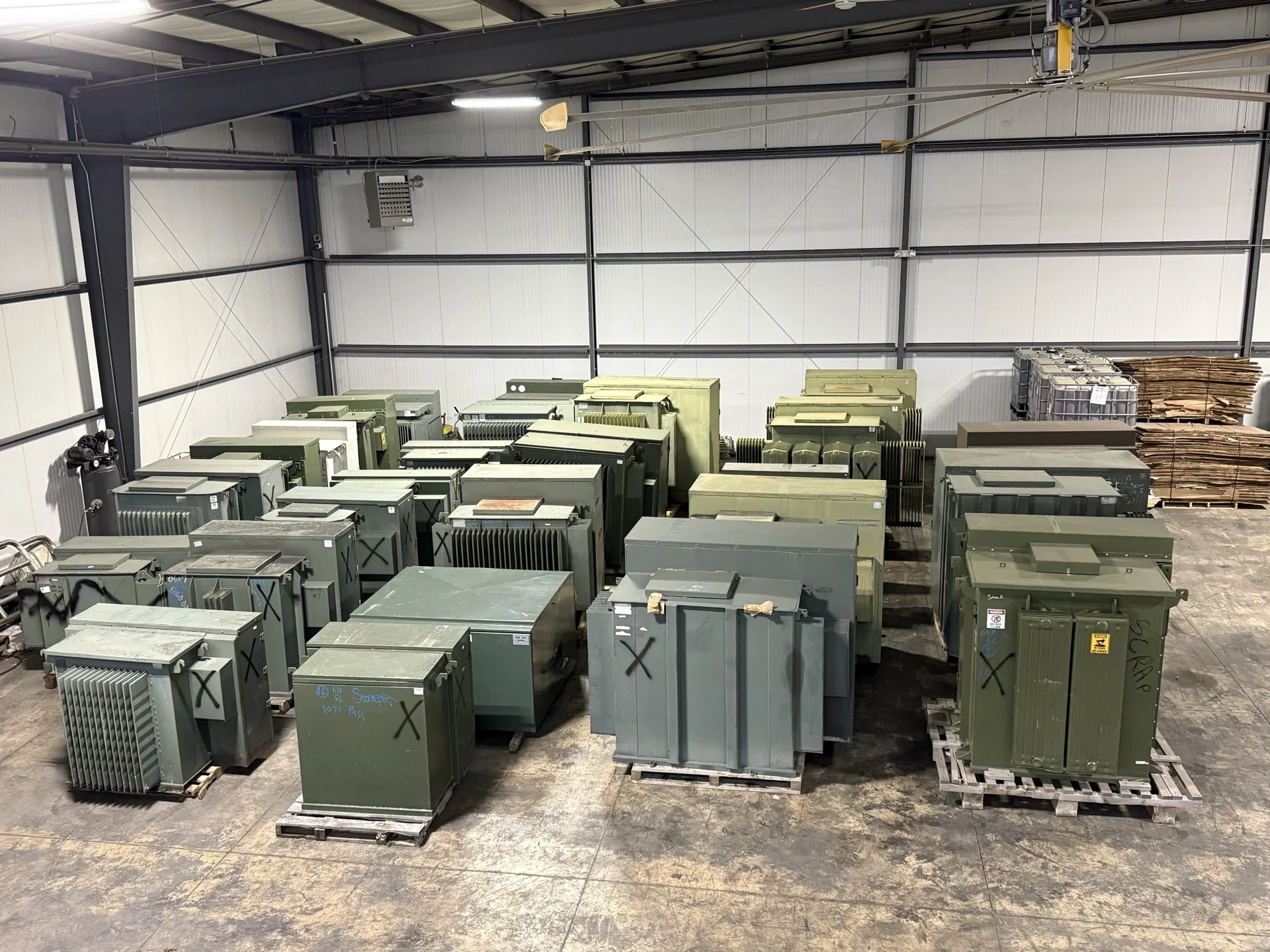
We purchase a wide range of transformers and related electrical gear. That includes padmount and polemount distribution transformers, substation power transformers, dry-type and oil-filled units, pole-mounted regulators, unit substations, switchgear, and control transformers. We also accept damaged or scrap cores and coils for recycling or reclamation.
Technical differences matter when assessing value and handling requirements. Large step-up or step-down power transformers have different lifting points, oil quantities, and transport dimensions than small distribution padmounts, and dry-type units require different handling to protect windings and enclosures. We classify equipment by type, weight, and condition to determine the safest and most efficient removal approach.
If you have related electrical assets such as switchgear, control panels, or obsolete protection equipment, include those in your inquiry. Combining pickups can streamline logistics and often leads to faster scheduling. We will provide an integrated plan that treats the entire job holistically—from disconnect and decommissioning to loading and transport—so you can close the project with a single point of contact.

Condition and testing
Pricing, Cash Offers, and Payment Process
Our evaluation considers unit type, weight, condition, and market factors for reusable components and scrap metal. After the initial review we issue a cash offer. The offer reflects the current state and the expected cost of transportation and remediation if required. Offers are provided as straightforward cash proposals to put funds in your hands rather than complex terms or conditional pricing.
When an offer is accepted we confirm pickup windows and necessary site preparations. Payment methods and timing are discussed transparently; we typically arrange payment upon collection or shortly after the unit is taken, depending on project size and paperwork. If you require an internal approval process, we will accommodate scheduling needs and supply documentation to assist your procurement or asset management teams.
If a unit requires additional environmental handling, specialized transport, or lengthy permitting, those elements are noted in the proposal and scheduled accordingly. Our goal is to present a clear, defensible cash offer and follow a payment process that aligns with your internal controls while keeping the project moving forward.
Freight
Service Coverage, Scheduling, and Nationwide Work
We operate across all 50 states and coordinate with rigging and transport partners to serve urban, industrial, and remote sites. Nationwide coverage means we can source local crews for site-specific needs while maintaining a consistent process and single point of contact for you. Whether the unit is in a city substation, a rural pole line, or inside a manufacturing plant, we plan for local regulations and traffic considerations.
Scheduling depends on crew availability, permitting timelines, and your preferred removal window. For routine pickups we often schedule within a matter of days; complex removals that require cranes, traffic control, or environmental oversight may take longer to coordinate. We will provide realistic timelines during the quoting process and update you if there are any changes due to weather, permits, or site restrictions.
For recurring projects or multi-site rollouts we can create a master schedule and phase work to align with your operational priorities. Advance planning and consolidated logistics reduce overall cost and disruption, allowing your team to focus on core activities while we manage the specifics of asset removal and freight.
Where to go next
Common questions
Questions sellers ask
What information do you need to provide a cash offer?
Send clear photos of the nameplate, exterior, and site context, along with the nameplate data itself if possible. Include kVA, primary and secondary voltages, phase, serial number, and any notes about oil leaks, repairs, or environmental concerns. Site access details and whether the unit is energized are also important. With those items we can often give a preliminary cash offer and schedule a follow-up inspection if needed.
Do you buy non-working or heavily damaged transformers?
Yes. We purchase failed and scrap units as well as working transformers. Damaged units are assessed for salvageable materials like copper windings, steel, and reclaimable oil where permitted. If a unit is suspected of containing PCBs or other contaminants, disclose that early so we can plan appropriate handling, testing, or disposal measures as part of the removal plan.
Who handles disconnecting and de-energizing the equipment?
Typically the site is responsible for isolating and de-energizing equipment before our crew arrives unless prior arrangements are made. We coordinate with your electrical or maintenance staff to confirm LOTO procedures and access. If you prefer, we can arrange for qualified contractors to perform disconnects as part of a full-service removal, but that would be specified in the scope and reflected in scheduling and pricing.
How do you manage environmental concerns like oil spills or PCB contamination?
We evaluate oil-bearing units during the initial review and inspection. If contamination is suspected or confirmed, we specify the necessary containment, testing, and transport methods in the proposal. Our teams include riggers experienced with lined trucks and secondary containment to minimize spill risk during loading and transit. Any required remediation steps are coordinated with you before the pickup to ensure compliance with local regulations.
How long does scheduling and pickup usually take?
Simple pickups with clear access and no permitting issues can often be scheduled within a few days. More complex jobs requiring cranes, traffic control, or environmental oversight may require weeks to coordinate. After you accept a cash offer, we confirm a specific arrival window and the expected duration of work so you can plan around the removal.
Do you serve remote or multi-site projects?
Yes, we operate nationwide and handle single-site removals as well as multi-site rollouts. For larger or recurring projects we can prepare a phased schedule, coordinate local contractors, and consolidate freight to optimize cost and timing. Provide project scope and site lists and we will develop a plan that minimizes disruptions and streamlines logistics.
Ready to move the unit?
Ready to move a transformer off your site? Call Moses Johnson at 954-740-1983 or email electricalequipmentbuyers@gmail.com to start the process. Tell us the basic nameplate data, site location, and any access or environmental notes and we will respond with next steps, a preliminary cash offer, and a plan for inspection and pickup. We handle freight, rigging, and logistics so you can focus on operations. 954-740-1983 • electricalequipmentbuyers@gmail.com