We buy transformers nationwide — cash offers, and we arrange the rigging and freight. (954) 740-1983
Transformers Buyers
Padmount · Substation · Dry-Type
We buy. Cash paid.
Get an offer
Home/How it works

Direct buyer · Cash offers

The Simple Way to Sell Transformers: From Photos to Pickup

Transformers Buyers makes it straightforward to turn used, surplus, or scrap electrical equipment into cash. We buy from industrial facilities, utilities, contractors, and decommissioning teams, and we handle the heavy lifting from the first photo through final pickup.

Cash offer, paid on pickupWe arrange crane and freightWorking, failed or scrapOne unit or a whole substation
A grey padmount transformer and secondary cabinet on a concrete pad

Request a cash offer

Send the nameplate. Get a number back.

The kVA rating and voltages are enough to start.

Or call (954) 740-1983

15 kVA - 100 MVARange
NationwideCoverage
We arrange itRigging
Cash on pickupPayment

Overview

Whether you have a padmount that still runs, a failed substation unit, a yard of dry-type distribution transformers, or a control transformer pile that needs clearing, our process is fast, organized, and built around safety and compliance. You contact us, we evaluate, we make a cash offer, and we coordinate freight and rigging nationwide. Communication is handled directly by owner Moses Johnson, so you always know where the deal stands and who to call. If you are ready to move equipment off your site without disrupting operations, this page walks you through each step.

Why sell to us

What We Buy and Where We Operate

We buy working units, failed units, and scrap units. That includes padmount and polemount transformers, substation and distribution units, dry-type and oil-filled designs, step-up and step-down transformers, control and industrial transformers, plus switchgear and unit substations. If it is electrical power equipment and you want it sold, we are interested in making a cash offer.

Our reach is nationwide across all 50 states. From urban facilities with tight dock schedules to remote substations with uneven access roads, we align the right trucking and rigging approach for your site. The same single process applies everywhere: photos, evaluation, offer, paperwork, payment, and pickup. No need to coordinate multiple vendors; we handle the logistics, and you get a clear plan and one point of contact.

What we buy

Step 1: Initial Contact and Photos

Start by calling 954-740-1983 or emailing electricalequipmentbuyers@gmail.com. Share what you have, where it is, and a rough timeline. If you have many pieces, a quick list by type helps us understand the scope. We will let you know which photos will allow a fast evaluation and whether any site constraints matter for removal.

Good photos save time. Include the nameplate, overall shots of each unit, and close-ups of bushings, radiators, tap changers, cores, coils, and control cabinets where applicable. Add images that show how the equipment sits now, including ground clearance, door widths, overhead obstructions, and dock or yard access. If oil-filled, pictures of valves, gauges, and any labeling related to fluid type help us plan handling.

If a unit is down or partially disassembled, photos of the damage are welcome. Do not move anything just for pictures. We work from what you can safely capture and ask focused follow-up questions as needed.

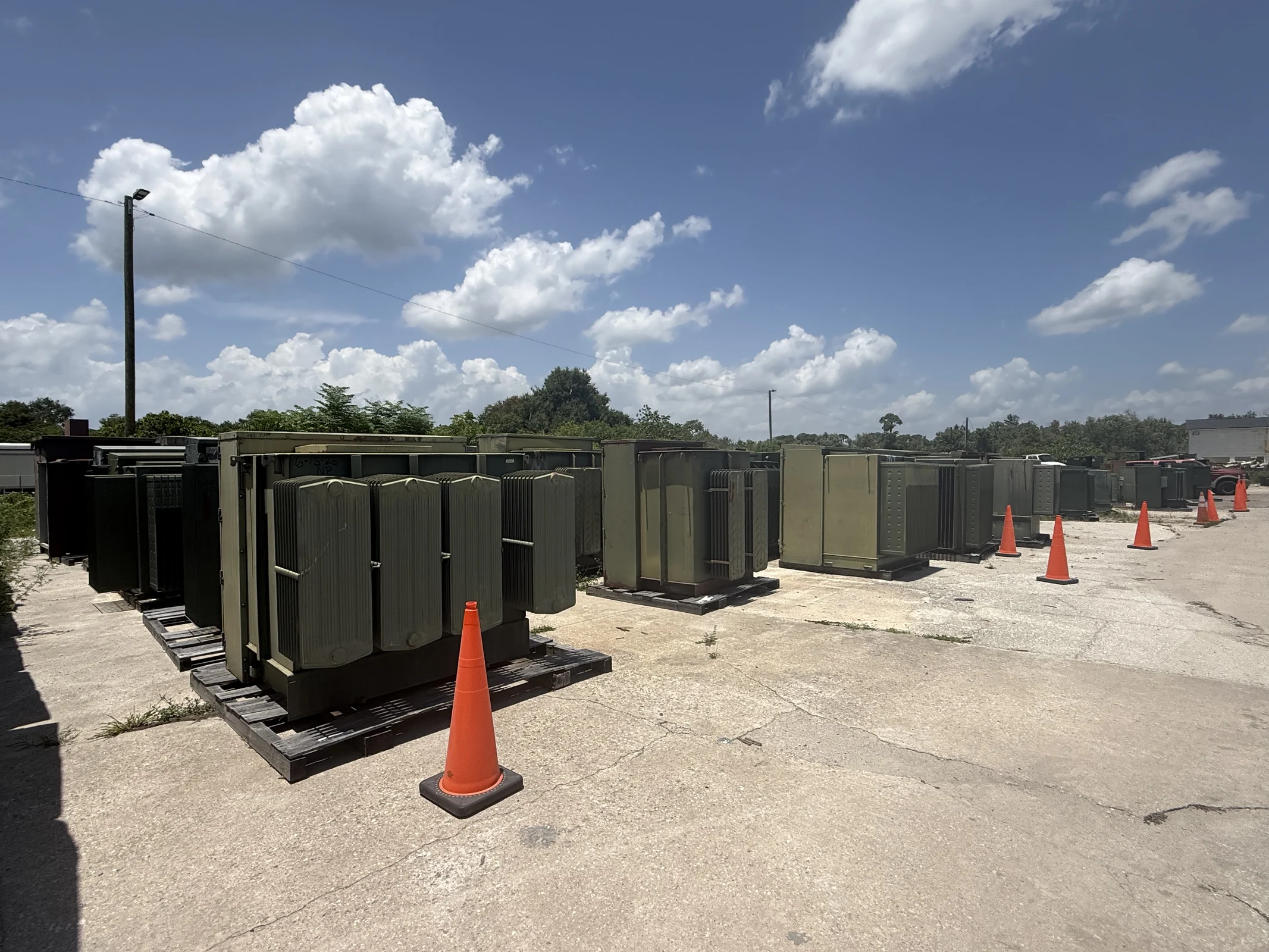
A row of green padmount transformers staged in a yard

How it works

Step 2: Nameplate Details and Technical Review

The nameplate tells the story we need to craft your offer and removal plan. Key details include kVA or MVA rating, primary and secondary voltages, phase, frequency, cooling class, impedance, serial number, and manufacturer. For dry-type equipment, winding material and enclosure style matter. For oil-filled units, fluid identifiers and any special features such as LTCs or surge arresters are useful.

If a nameplate is missing or unreadable, do not worry. We can often confirm the essentials from other indicators on the unit, historical records, utility stickers, relay cabinets, engravings, or dimensions. When in doubt, we may ask you to measure length, width, height, and estimate weight, or we may suggest a brief on-site look by our partner crew if that speeds things up. The goal is a clear technical picture so your pricing and logistics are accurate the first time.

Logistics and payment

A row of padmount transformer cabinets beneath transmission lines

Step 3: Your Cash Offer, Explained

Once we have the photos and nameplate information, we evaluate the unit’s working value, parts potential, or scrap value. Working padmounts and clean dry-type units follow one pricing logic, while failed or dismantled substation transformers follow another. We consider brand, model, condition, specifications, removal complexity, current demand, and market conditions for metals and components. When units are mixed, we price them transparently by group or line item.

We present a clear cash offer and outline the assumptions behind it, including anticipated rigging scope, trucking requirements, and any site conditions that influence cost. If you have multiple locations or a phased schedule, we price accordingly and propose a sequence that fits your operations. If something changes, such as access constraints or additional units, we update the offer promptly so you can make an informed decision.

Detail

Step 4: Paperwork and Payment

After you accept our offer, we confirm details in writing. Typical documents include a purchase agreement and bill of sale. If your company requires vendor setup documents, a certificate of insurance from our rigging partners, or site-specific safety acknowledgments, we provide them promptly. Clear paperwork means a clean handoff on pickup day and a smooth internal process for your team.

Payment timing is arranged to match your procedures and our removal plan. Common options include wire transfer or ACH prior to pickup upon receipt of the executed bill of sale and invoice, or payment at pickup with a cashier’s check when custody transfers. If a project is complex, we may coordinate a deposit and a balance on completion. We keep communication open so you know exactly when funds will be initiated and when to expect confirmation.

Also worth knowing

Step 5: Freight Planning and Rigging Logistics

With paperwork set, we coordinate trucking and rigging. We match equipment weight and dimensions to the right trailers and lifting gear, then set a timeline around your site schedule. For urban jobs, we plan arrival windows that minimize congestion. For remote sites, we account for road conditions, turnaround space, and seasonal access. Our goal is to arrive with what is needed and leave your area clean and safe.

Rigging scope is tailored to the site. That might involve forklifts, skates, jacks, or cranes for large substation units. We verify lift points, confirm center of gravity where possible, and protect surfaces as we move equipment through doors or across pads. If utilities need to be present for disconnects or lockout-tagout procedures, we coordinate so nothing is rushed. We provide instructions on staging areas and traffic flow to keep your operations running during removal.

Before pickup day, you receive a concise plan with contacts for the driver and rigging lead, estimated arrival times, and a checklist of anything we need on your side, such as gate codes or escort requirements. Clear planning prevents on-site surprises.

A large substation power transformer loaded on a rail flatcar

Condition and testing

Step 6: Environmental Compliance and Oil Handling

Oil-filled transformers require thoughtful handling. We plan containment, lining, and absorbent materials as needed. If oil must be removed prior to rigging, we schedule safe pumping and closed transfer to approved containers. Labels and documentation are maintained through custody changes so records match each unit from start to finish.

Where fluid testing or characterization is appropriate, we coordinate sampling through qualified partners. We follow applicable federal, state, and local rules to help protect your site and our crews. If your facility has internal environmental procedures, we integrate them, whether that is a pre-job briefing, spill kit placement, or site-specific permits. Our objective is to leave the area as we found it, with clean paperwork and a clear record of responsible handling.

Freight

Step 7: Pickup Day and After the Load

On the agreed date, the driver and rigging team check in and review the plan with your site contact. We confirm isolation and de-energization have been completed by your team where applicable. Then we execute the lift and load, secure the equipment, and complete the bill of lading and transfer documents. If payment is scheduled at pickup, we finalize it at this time. Throughout the day, you have direct access to owner Moses Johnson for any decision or timing question.

After the equipment leaves, we follow up with final documents you may need, such as signed bills of lading, weight tickets when relevant, and paid invoices or receipts. If you have more units to sell later, we can keep a running inventory list and circle back when you are ready. Many clients use this same process for one transformer or an entire yard, because the steps stay consistent and communication remains simple.

Common questions

Questions sellers ask

What photos do you need to make an offer on my transformer?

Start with a clear nameplate photo, then wide shots from each side so we can see bushings, radiators, and enclosures. Add close-ups of tap changers, gauges, control cabinets, and any damage. For oil-filled units, include valve and labeling photos. For dry-type, include coil and enclosure details. Finally, show the surrounding area, door widths, overhead obstructions, and the path to the loading point. These images let us price accurately and plan safe rigging without multiple site visits.

Do you buy failed transformers, leaking units, or scrap piles?

Yes. We buy working units, failed units, and scrap units. If a transformer is leaking or partially dismantled, we ask for photos and a quick explanation of the condition so we can plan handling and containment. For loose coils, cores, or copper and aluminum windings, we also buy those along with associated switchgear. We will price according to condition and the logistics involved and outline how we will stage, pump oil if needed, and safely remove everything.

How do you determine pricing for my equipment?

Pricing is based on specifications, condition, brand, and removal complexity. For reusable equipment, we look at working and parts value. For failed or scrap units, we consider recoverable materials and market conditions. Access, rigging difficulty, and distance also influence the offer. We explain the assumptions behind our cash offer so you understand how the figure was reached. If conditions or scope change, we update pricing promptly so you can make a clear decision.

How quickly can you pick up my transformer after we agree on a price?

Timeline depends on location, unit size, and rigging needs. Smaller dry-type or control transformers can often move fast once paperwork and payment are set. Larger padmount and substation units may require crane scheduling, route planning, and specific trailers. We propose a target date, confirm your site hours and access rules, and lock in a day that fits your operations. The key is clear communication from the start so trucks and crews arrive ready.

Who handles oil removal and environmental paperwork?

We coordinate oil handling through trusted partners and bring the right containment and transfer equipment for the job. If sampling or characterization is needed, we plan that in advance. We maintain labels and documentation through custody transfer so your records are complete. If your facility requires site-specific environmental forms, we work with your team to satisfy those requirements. Our aim is safe fluid management, clean paperwork, and a tidy site when we depart.

Do you also buy switchgear, unit substations, and small control transformers?

Yes. In addition to padmount, polemount, substation, distribution, dry-type, and oil-filled transformers, we buy switchgear, unit substations, and control transformers. If you are decommissioning a lineup or clearing a storeroom, send a list and photos. We can price equipment by group and plan a single pickup, or phase the project if that suits your schedule. One point of contact simplifies coordination across mixed equipment types and multiple locations.

Ready to move the unit?

If you are ready to move used, surplus, or scrap transformers off your site with a straightforward plan, reach out today. We will review photos, make a clear cash offer, and coordinate freight, rigging, and environmental handling nationwide. Talk directly with owner Moses Johnson and get a timeline that fits your operation. Call 954-740-1983 or email electricalequipmentbuyers@gmail.com to start the process now.

Call (954) 740-1983 Request a cash offer